discovering business and user needs
PROJECT CHALLENGES
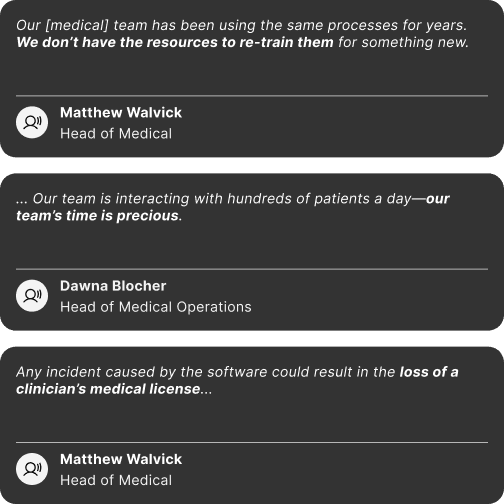
How can we seamlessly migrate 100+ medical team members to a new EMR while scaling patient volume by x60?
PROJECT GOALS
Risk-aversion
A mistake made by the software could cause a clinician to lose their medical license. The medical team need a platform they can trust to deliver reliable, efficient care.
Efficiency
The medical team performs the same tasks and navigates the same flows daily. The medical team need design solutions that save them time so that they can interact with more patients.
design challenge
designing within a regulated environment
CHALLENGE
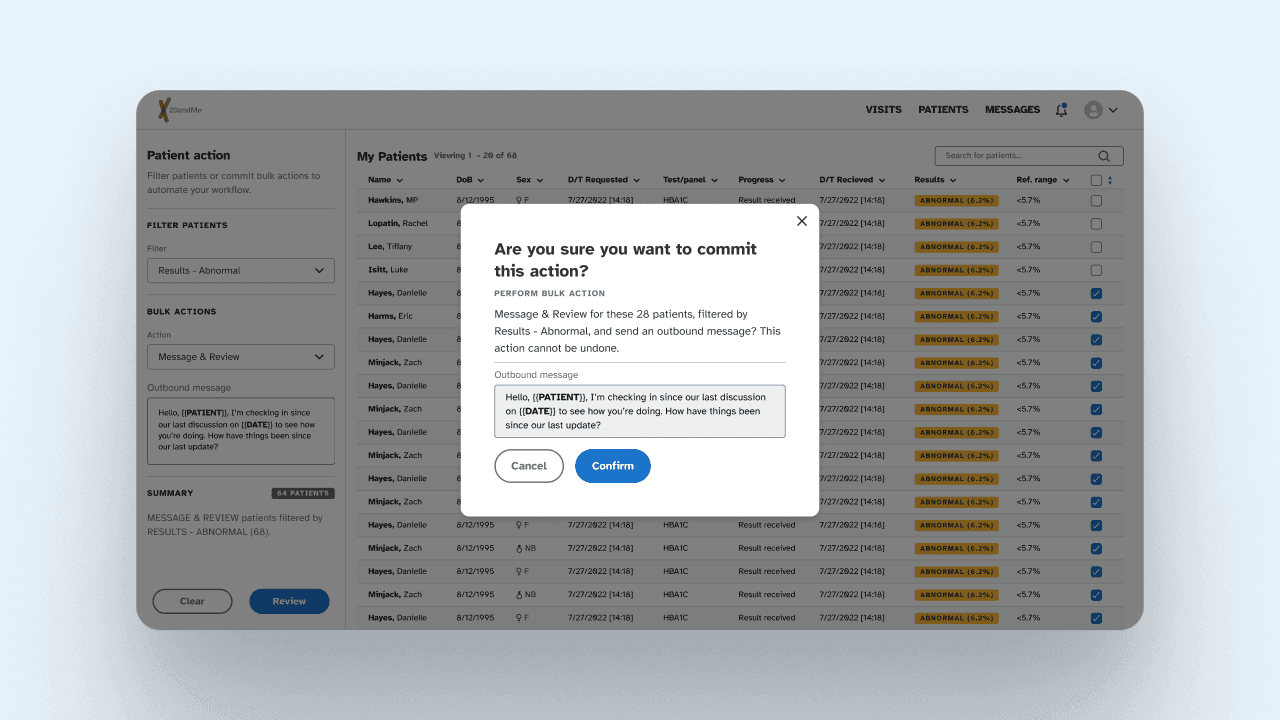
After aligning on the direction of the EMR, we brought in our Legal team who informed us that too much automation compromises our products largest limitation: our EMR was not a medical device.
SOLUTION
My team spent time learning the requirements of a medical device, learning how we can operate around this restriction. We rolled back our automation solution to include some user intervention, requiring that the cinician manually submit the automation as a bulk action.
proposing my solutions
During this phase, the requiremens for the EMR were still being determined and I led collaborative design sessions to brainstorm ideas with stakeholders. My three goals to enhance UX for the first iteration of this EMR were to centralize medical team tools within the product, introduce automation to repetitive tasks, and define a modular and scalable IA that would require minimal redesign as requirements evolved.
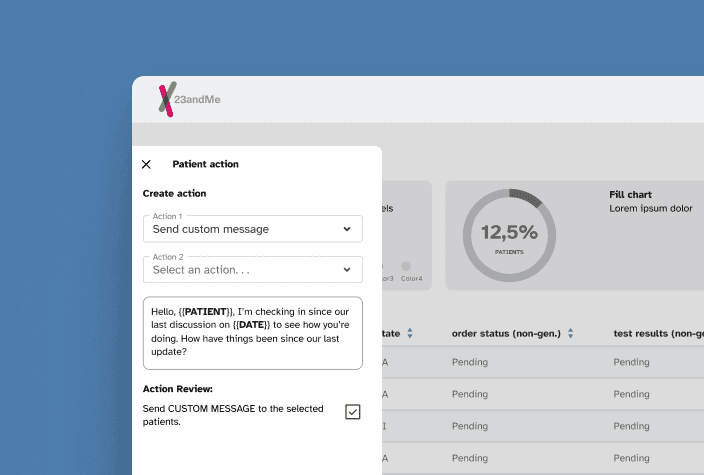
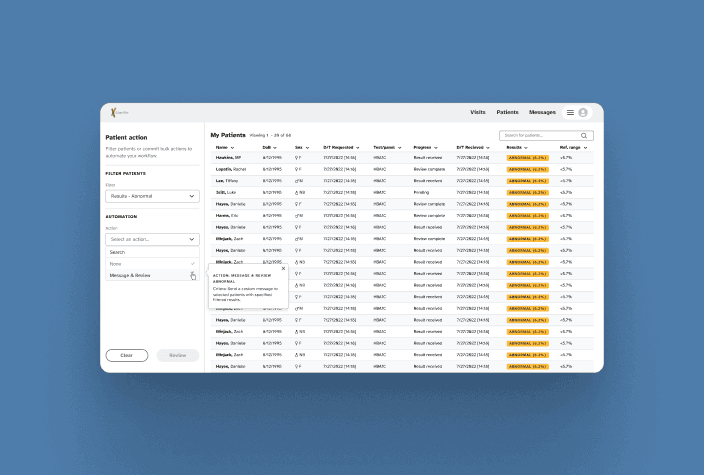
After noticing that some task templates required very minimal personalization, I proposed automating the template entry. This idea led to automating the entire lab test approval and result release tasks.
Exploring automated solutions
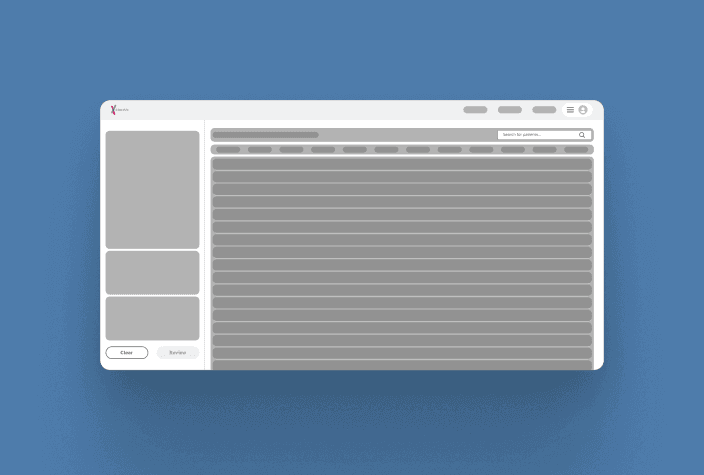
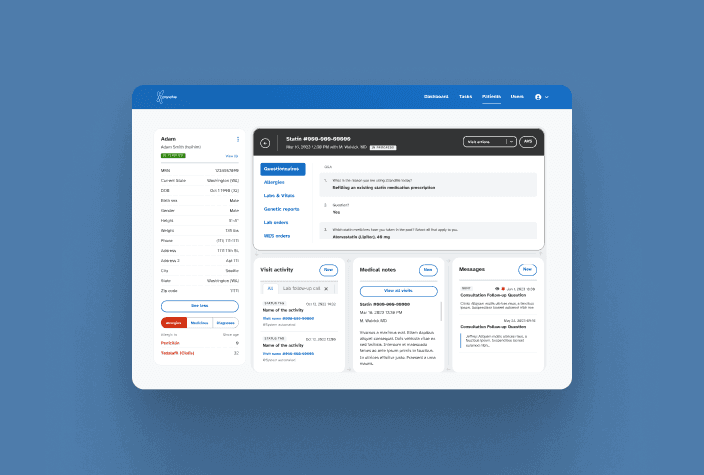
Anticipating that more tasks could be automated in the future, I created a modular layout, allowing for semi-personalized interfaces depending on medical team role. All components were built as mini-tables, easily achieving consistancy across the platform with many customization options.
Defining the Information Architecture
The first thing I explored was how to bring external medical team templates into the product (2-way messaging, outbound messages, after-visit summary, etc.). At first, I visualized this as a library of templated files that the medical team could insert into text fields.
Reducing the tech ecosystem
informing my design strategy
Utilized heuristic evaluation, contextual inquiry, and prototype usability testing to understand the legacy platform, existing medical team processes, and gather feedback on design ideas.
RESEARCH METHODS
RESEARCH GOALS
These methods were used to understand how the medical team interacts with patients; identify inefficiencies in medical processes; and help make our project goals more tangable.
RESEARCH RESULTS
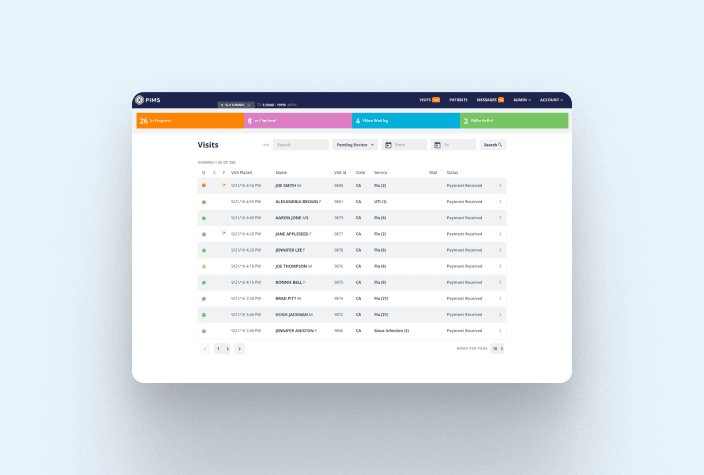
The medical team utilized many different platforms beyond the legacy EMR, including Zendesk, Microsoft Word, and more. Several medical processes included redundant user interactions. Medical team utilized templates for patient communication, but spent large efforts in customizing messages.
impact and reflection
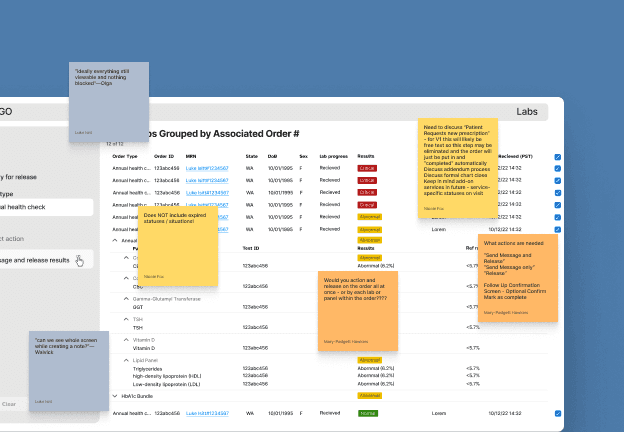
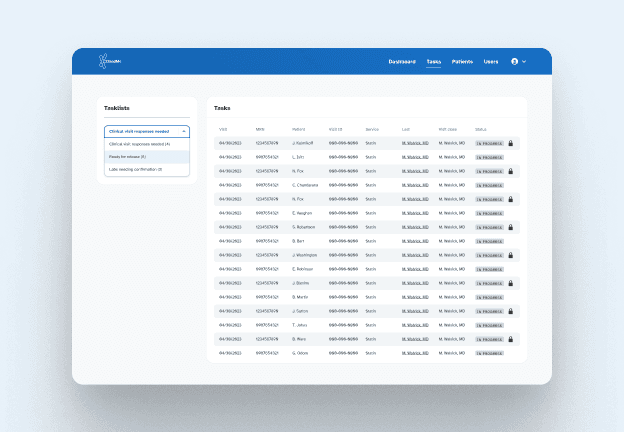
Our automated solution reduced the amount of clinician interactions from 2,950 to 7 per 50 patients (max patients per pagination). This saved the medical team an estimated ~16,900 hours annually, or ~8 FTE.
-99.7% medical team interactions for lab-related tasks
While leaning on 23andMe's Web design system, the design and eng teams required more complex components not met by existing systems. We worked with the design system team to template each layout and component, launching our design system on Storybook.
Launched 23andMe's Internal Tools design system
Cross-functional whiteboarding sessions with the medical team became the foundation for building stakeholder trust. By framing these sessions as explorative (not decision-making design reviews), I created a space for clinicians to voice patient safety and workflow constraints that I wouldn't have identified through observation alone. This collaboration uncovered visibility into redundant interactions user interactions, later becoming the north star for automation decisions.
Preventing design-by-committee sessions

23ANDME
In-House EMR
OVERVIEW
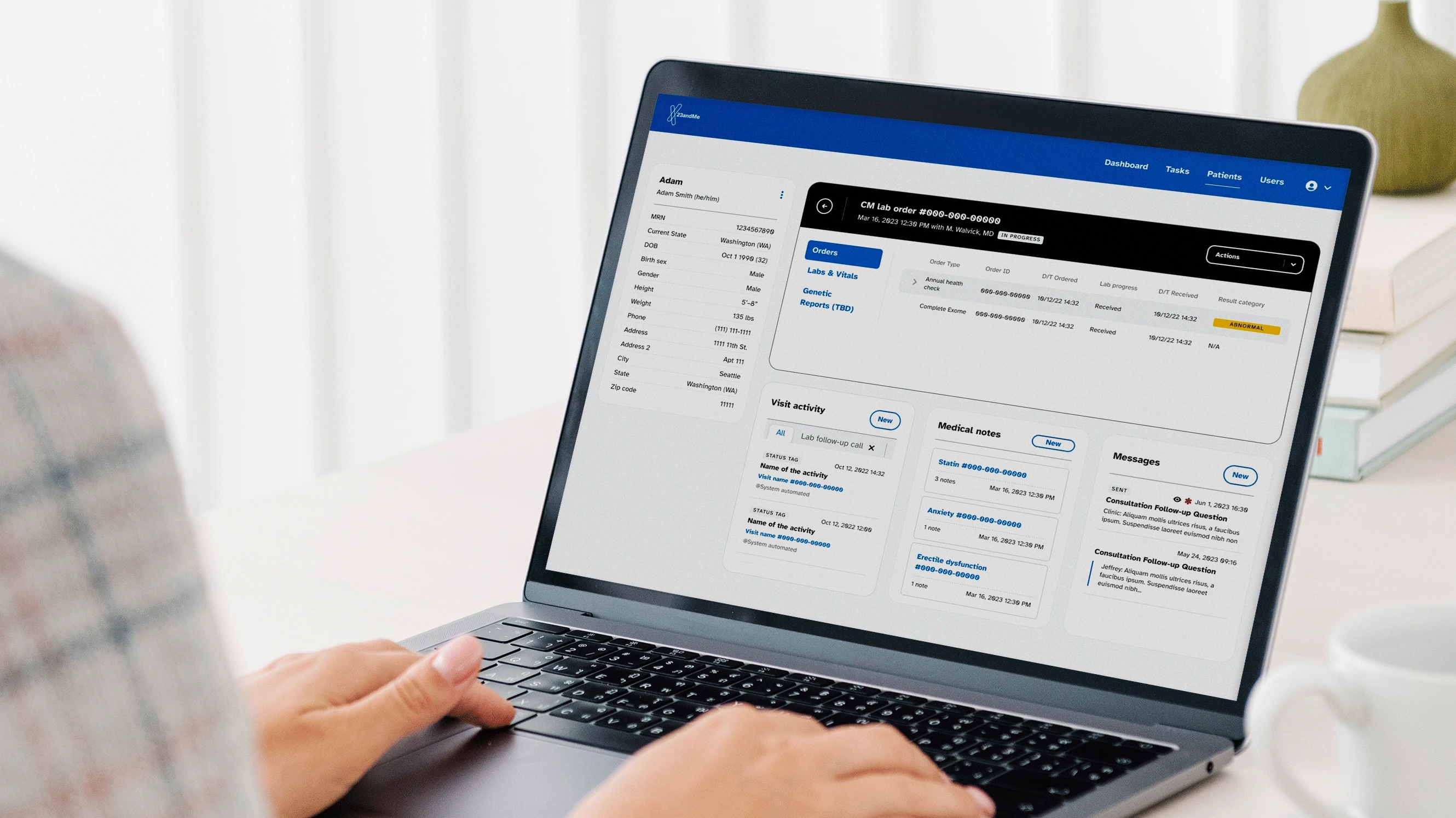
End-to-end design for the clinician-facing Electornic Medical Record (EMR) system. Strategized and launched a platform that enabled clinicians to treat patients at scale within a regulated environment.
ROLE
End-to-end product design
DURATION
2022-2025
TEAM
1 PD (me), 3 PM Leads, 4 Medical Team Leads, 2 (ENG) Team Leads, 2 Principal Engineers, 2 Front-end Engineers... and many more.
about the project
After acquiring Lemonaid Health Inc. in 2021, 23andMe began redefining its product strategy, pivoting into personalized healthcare. By prioritizing disease prevention, 23andMe aimed to help patients understand their genetic predispositions and deliver tailored guidance to reduce and even eliminate health risks.
I was tasked with designing an in-house EMR in this company-wide endeavor, migrating the medical team, and sunsetting the legacy EMR platform used at Lemonaid Health.
This case study explores the first product iteration of our in-house EMR, introducing a newly-automated workflow referred to as Task List.
discovering business and user needs
PROJECT CHALLENGES
How can we seamlessly migrate 100+ medical team members to a new EMR while scaling patient volume by x60?
PROJECT GOALS
Risk-aversion
A mistake made by the software could cause a clinician to lose their medical license. The medical team need a platform they can trust to deliver reliable, efficient care.
Efficiency
The medical team performs the same tasks and navigates the same flows daily. The medical team need design solutions that save them time so that they can interact with more patients.
informing my design strategy
RESEARCH METHODS
Utilized heuristic evaluation, contextual inquiry, and prototype usability testing to understand the legacy platform, existing medical team processes, and gather feedback on design ideas.
RESEARCH GOALS
These methods were used to understand how the medical team interacts with patients; identify inefficiencies in medical processes; and help make our project goals more tangable.
RESEARCH RESULTS
The medical team utilized many different platforms beyond the legacy EMR, including Zendesk, Microsoft Word, and more. Several medical processes included redundant user interactions. Medical team utilized templates for patient communication, but spent large efforts in customizing messages.
proposing my solutions
During this phase, the requiremens for the EMR were still being determined and I led collaborative design sessions to brainstorm ideas with stakeholders. My three goals to enhance UX for the first iteration of this EMR were to centralize medical team tools within the product, introduce automation to repetitive tasks, and define a modular and scalable IA that would require minimal redesign as requirements evolved.
Reducing the tech ecosystem
The first thing I explored was how to bring external medical team templates into the product (2-way messaging, outbound messages, after-visit summary, etc.). At first, I visualized this as a library of templated files that the medical team could insert into text fields.
Exploring automated solutions
After noticing that some task templates required very minimal personalization, I proposed automating the template entry. This idea led to automating the entire lab test approval and result release tasks.
Defining the Information Architecture
Anticipating that more tasks could be automated in the future, I created a modular layout, allowing for semi-personalized interfaces depending on medical team role. All components were built as mini-tables, easily achieving consistancy across the platform with many customization options.
design challenge
designing within a regulated environment
CHALLENGE
After aligning on the direction of the EMR, we brought in our Legal team who informed us that too much automation compromises our products largest limitation: our EMR was not a medical device.
SOLUTION
My team spent time learning the requirements of a medical device, learning how we can operate around this restriction. We rolled back our automation solution to include some user intervention, requiring that the cinician manually submit the automation as a bulk action.
impact and reflection
Our automated solution reduced the amount of clinician interactions from 2,950 to 7 per 50 patients (max patients per pagination). This saved the medical team an estimated ~16,900 hours annually, or ~8 FTE.
-99.7% medical team interactions for lab-related tasks
Launched 23andMe's Internal Tools design system
While leaning on 23andMe's Web design system, the design and eng teams required more complex components not met by existing systems. We worked with the design system team to template each layout and component, launching our design system on Storybook.
Preventing design-by-committee sessions
Cross-functional whiteboarding sessions with the medical team became the foundation for building stakeholder trust. By framing these sessions as explorative (not decision-making design reviews), I created a space for clinicians to voice patient safety and workflow constraints that I wouldn't have identified through observation alone. This collaboration uncovered visibility into redundant interactions user interactions, later becoming the north star for automation decisions.
other case studies

End-to-end design for the clinician-facing Electornic Medical Record (EMR) system. Strategized and launched a platform that enabled clinicians to treat patients at scale within a regulated environment.
OVERVIEW
1 PD (me), 3 PM Leads, 4 Medical Team Leads, 2 (ENG) Team Leads, 2 Principal Engineers, 2 Front-end Engineers... and many more.
TEAM
End-to-end product design
ROLE
2022-2025
DURATION
In-House EMR
23ANDME
End-to-end design for the clinician-facing Electornic Medical Record (EMR) system. Strategized and launched a platform that enabled clinicians to treat patients at scale within a regulated environment.
OVERVIEW
1 PD (me), 3 PM Leads, 4 Medical Team Leads, 2 (ENG) Team Leads, 2 Principal Engineers, 2 Front-end Engineers... and many more.
TEAM
In-House EMR
23ANDME
End-to-end product design
ROLE
2022-2025
DURATION
about the project
After acquiring Lemonaid Health Inc. in 2021, 23andMe began redefining its product strategy, pivoting into personalized healthcare. By prioritizing disease prevention, 23andMe aimed to help patients understand their genetic predispositions and deliver tailored guidance to reduce and even eliminate health risks.
I was tasked with designing an in-house EMR in this company-wide endeavor, migrating the medical team, and sunsetting the legacy EMR platform used at Lemonaid Health.
This case study explores the first product iteration of our in-house EMR, introducing a newly-automated workflow referred to as Task List.